I am pretty entrenched in Swift. I love the language and the ecosystem, and I reach for it without thinking. The one thing that nags at me is Android. I like shipping software people can use, and picking Swift means quietly accepting that a whole platform is off the table.
So I decided to try React Native. React is already my default for websites, which made the jump feel smaller than learning Kotlin or Flutter from scratch. In theory I could keep one mental model for UI, share a bunch of logic, and stop treating Android as the thing I’ll get around to in the future.
A tiny app, a high bar
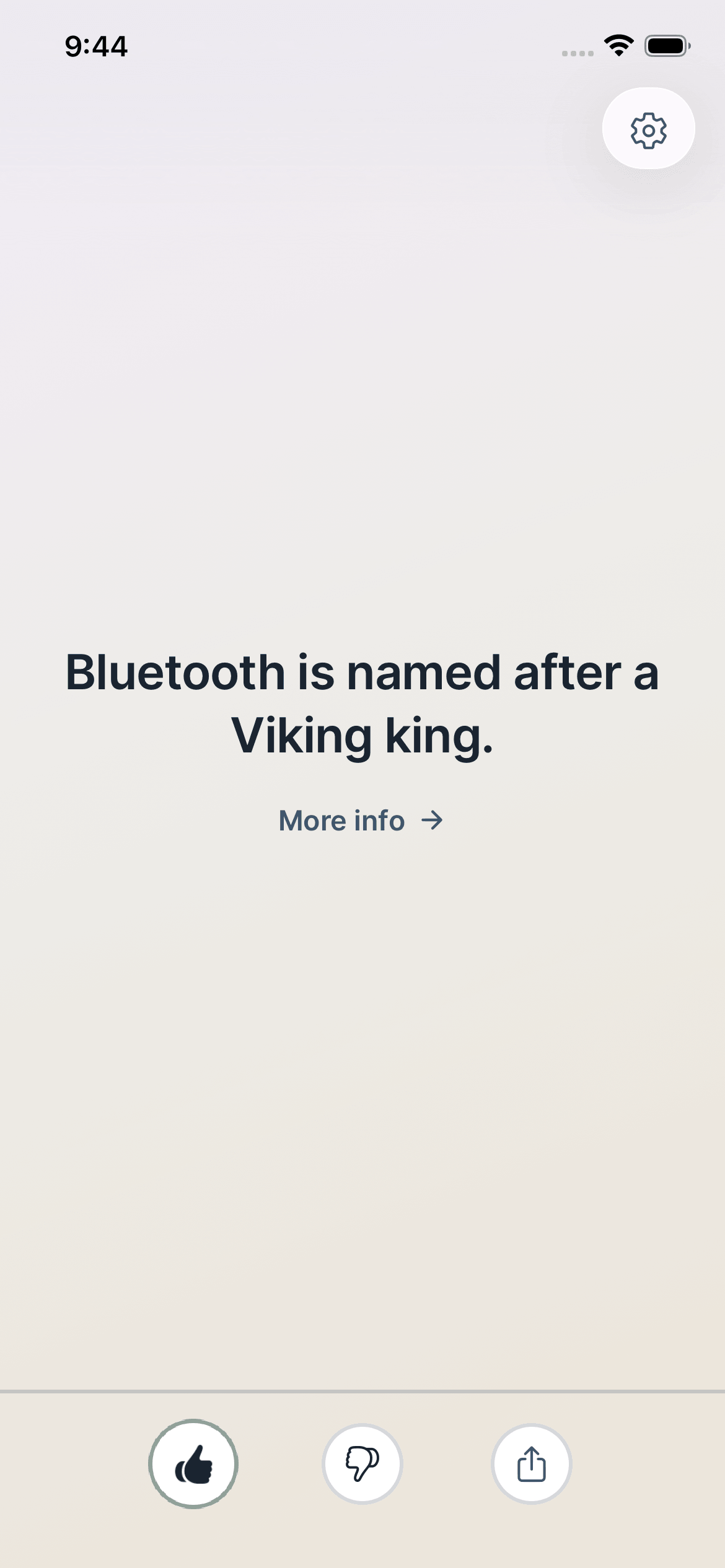
For the experiment I wanted something with almost no product design overhead: a daily facts app. One idea per day, vote if you liked it, move on. Because the concept was so simple, I felt the only way it could stand out was polish: calm typography, lots of whitespace, and interactions that feel intentional rather than “good enough.”
I used Cursor for the first pass. It came back with something that worked but looked rough. After a few more prompts the layout matched what I had in my head, which was encouraging right up until I used it for real. Something was wrong but I couldn’t put my finger on it. It just didn’t feel like an iOS app I would ship.
What SwiftUI made obvious
Rebuilding the same screen in SwiftUI turned the vague feeling into a checklist. The vote buttons had a selected state with a border that looked jaggy instead of smooth. Transitions between states felt stiff compared with what I expect from native controls. Opening and closing settings lagged just enough to notice when I wanted it to feel instant. Touches on buttons did not give the little bit of feedback I am used to on iOS, so taps felt uncertain.
I am sure most of that is fixable in React Native if you dig into the right libraries, timing, and platform APIs. When I asked Cursor to chase the settings delay, the “fix” path ended with Expo crashing on my machine, which was a good reminder that “solvable” and “pleasant afternoon” are not the same thing.
What I am optimizing for
The larger issue is not whether those problems can be solved. It is that I do not want to spend energy auditing every control to make sure it behaves the way my finger expects. On iOS with SwiftUI, a lot of that comes almost for free, or at least feels familiar out of the box. Trading that for parity work across two platforms did not feel like a win for how I like to build.
So for now I am back to iOS-only side projects. I would rather ship one app that feels excellent on the hardware I care about most than two apps that are fine but never quite disappear into the background the way a great native UI does.
Same screen, two stacks